5 Factors That Affect Boom Lift Rental Prices
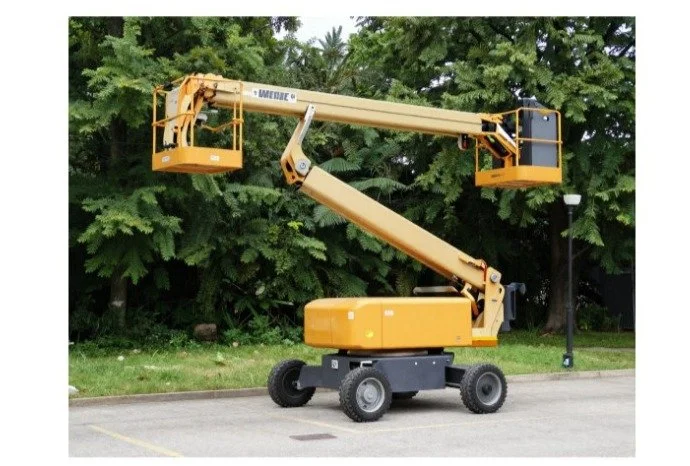
Boom lift rental prices depend mostly on five factors: the type of lift, how long you need it, how high it needs to reach, where your job site is, and the condition and features of the machine. These factors decide whether you pay a lower daily rate or a much higher one.
Boom lifts are used for all kinds of work across the U.S. Construction. They are used for electrical jobs, window cleaning on tall buildings, tree trimming, sign installation, and anything where you need safe access to hard-to-reach spots.
Most people just opt for boom lift rental instead of buying because buying one is expensive and, honestly, doesn't make sense unless you're using it constantly. Renting lets you pay only for the time you actually need.
The Factors that Determine Boom Lift Rental Prices
If you're looking into leasing, you're probably trying to figure out why one quote looks very different from another. If you don't know what affects the price, it's easy to overpay or rent the wrong machine.
That's why you need to understand these factors before you commit to anything. These are the deciding factors for boom lift rental prices:
1. Height and Reach
A boom lift that reaches 40 feet is very different from one that reaches 80 feet. The taller the machine, the heavier and more complex it becomes. It needs stronger materials, better stability systems, and advanced safety engineering.
It's not just vertical height either. Horizontal outreach matters too. If your project needs you to stretch across rooftops or over obstacles, you'll need a lift designed for that kind of extension. And those are priced accordingly.
This is why choosing the right size matters. If you rent something too small, you'll waste time and possibly need to swap it out. If you rent something way bigger than necessary, you're just paying extra for capacity you're not using. Getting the measurements right upfront can save you a lot of stress.
2. Rental Duration
Short-term rentals often cost more per day. You'd think a one-day rental would be cheap, but there are transportation costs, loading, unloading, inspections, and scheduling involved. Those logistics don't disappear just because you're only using the lift briefly.
Longer rentals usually bring the daily rate down. If you're renting for a week, a month, or longer, many providers reduce the per-day cost. The total bill will be higher because you're keeping it longer, but the rate itself is often better.
Also, if your project has multiple phases, sometimes keeping the lift longer makes more sense than returning and re-renting later.
3. Site Location
Where your job site is actually matters a lot. If the boom lift has to travel really far to get to you, that costs more money. Someone has to drive a big truck. The truck needs fuel. The driver needs to get paid. It's not just the machine magically showing up. All that moving around adds to the final price.
And if your site is way out somewhere, like not close to big cities or equipment yards, it can cost even more. Sometimes there aren't many lifts available in that area, so they have to bring one from far away. When that happens, you're basically paying for the distance and the hassle of getting it there.
4. Make and Model of the Machine
Not all boom lifts are the same, even if they look kind of similar. Some brands are known for being really strong, really safe, and full of advanced technology. Those usually cost more to rent because they're newer and people trust them more.
Even if you're looking at the same kind of boom lift, that doesn't mean they all cost the same. The model actually matters a lot. A newer one might have way better controls, for instance, the buttons and levers feel smoother and easier to use, and it might move more easily without being all jerky. Some of them might even have diesel engines. Because of that, it can cost more to rent.
But that doesn't mean the older ones are bad or anything. They're not broken or useless. A lot of older machines still work totally fine and can do the job just the same. It's just that the newer ones sometimes have updated safety features or better performance, and some job sites actually say you have to use equipment with those newer features.
5. Condition and Maintenance of the Equipment
This part is important, but people don't always think about it. If a boom lift is well taken care of, it usually costs more to rent. That's because someone is spending money to keep it in good shape.
They're checking it, fixing parts, replacing things before they break, and doing inspections. All that maintenance costs money.
Key Takeaways
The taller the lift goes, the more it costs.
Renting for one day can cost more per day than a whole week; it's because moving the machine around costs money no matter what.
If your job site is far away, you're paying for trucks, fuel, and driver time. especially if you're out in the middle of nowhere.
Newer machines with smoother controls and extra safety stuff usually cost more, even though older ones can still do the job just fine.
A well-maintained lift might cost a bit more, but it's less likely to break down on you.